

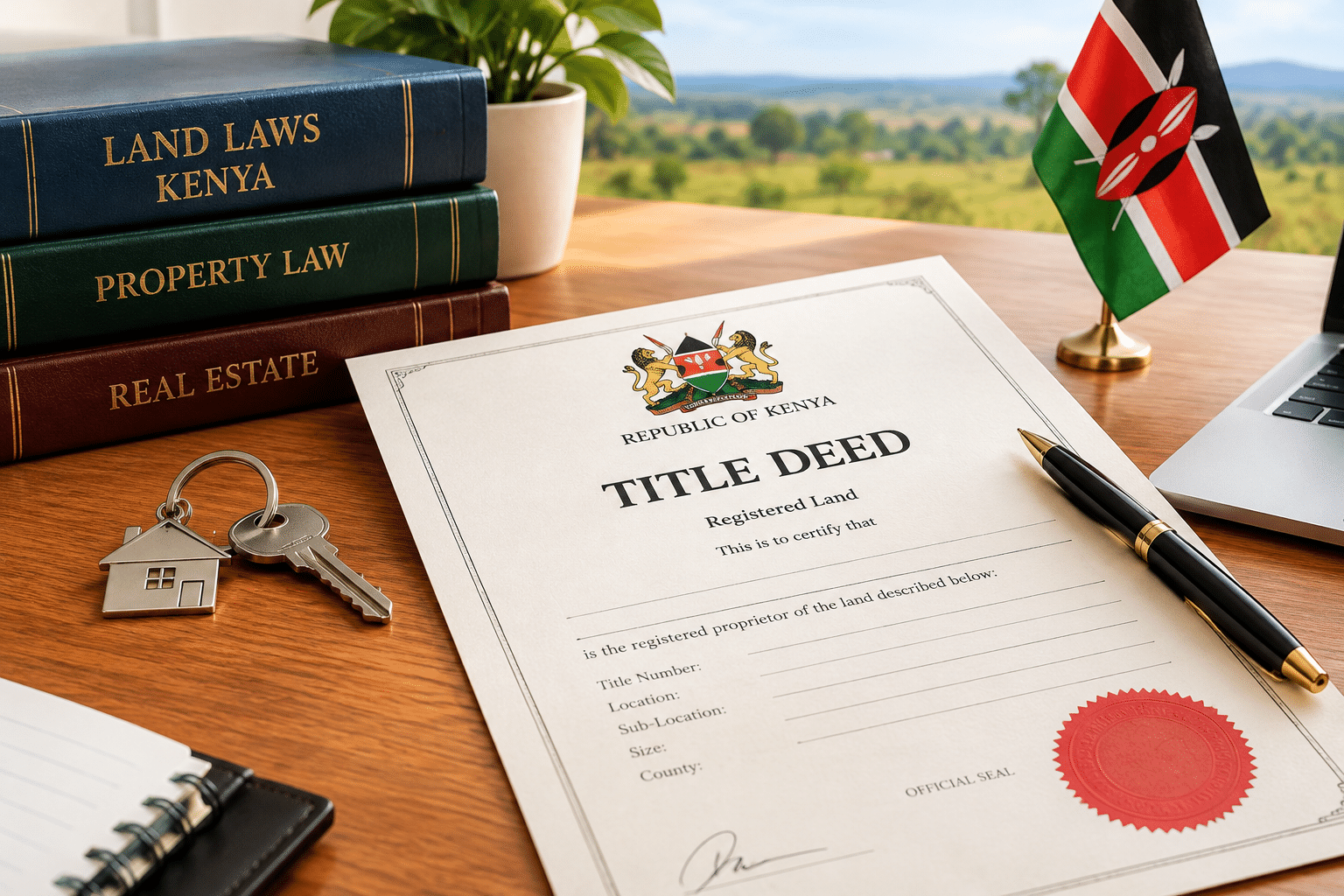

Understanding land ownership laws in Kenya is essential before buying property, building a home, or investing in land. The law determines who can own land, the rights attached to ownership, and the legal steps required to transfer property. Whether you are buying residential plots or investing for the future, proper due diligence can help protect your investment.
Types of Land Ownership in Kenya
Kenya recognises private, community, and public land under its Constitution.
Freehold ownership gives the registered owner ownership without a fixed lease expiry, subject to applicable laws and restrictions. Leasehold ownership grants rights to use land for a specified period under agreed conditions, which may include land rent and county land rates.
Community land belongs to communities identified by shared ancestry, culture, or similar interests. Its use and transfer are governed by the Constitution and the Community Land Act. Buyers should establish whether the land is registered community property and confirm that any proposed transaction is legally authorised.
Public land includes land reserved for public purposes, infrastructure, and environmental protection. It cannot be acquired through an ordinary private sale unless the relevant legal requirements for allocation or disposal have been satisfied.
Read the Constitution of Kenya’s land provisions.
Legal Rights and Responsibilities of Landowners
Registered landowners generally have rights to occupy, use, lease, or transfer their property, subject to applicable laws, registered interests, and planning restrictions. Owners must also respect boundaries, comply with land-use regulations, pay applicable rates and rent, and avoid interfering with neighbouring properties or public rights.
Land disputes may arise from boundary disagreements, inheritance claims, fraudulent transfers, or competing ownership documents. Depending on the issue, resolution may involve negotiation, mediation, survey services, land administration offices, or the Environment and Land Court.
Key Legal Processes in Land Acquisition
Before purchasing land, confirm the seller’s identity and authority to sell. Conduct an official land search to establish registered ownership and identify encumbrances, including charges, cautions, and restrictions.
The State Department for Lands explains the official search certificate process. Engage an independent property lawyer to review the sale agreement, confirm applicable consents, and guide payment, transfer, and registration.
Keep copies of identification documents, the signed agreement, payment records, transfer documents, and relevant registration evidence. A title deed should never replace independent verification.
Common Challenges in Land Ownership
Land fraud, forged documents, double allocation, succession disputes, and unclear boundaries can create costly complications. Avoid paying based only on advertisements or photocopied title deeds. Verify documents independently, inspect the property, and use traceable payment methods.
Buy Land with Greater Confidence
Choosing land requires careful research and legal verification. Explore properties available through Miliki Land Leo and contact our team to enquire about available plots. Seek independent legal advice before committing to a purchase